 back to anareus.cz

Airsoft dictionary
HRC
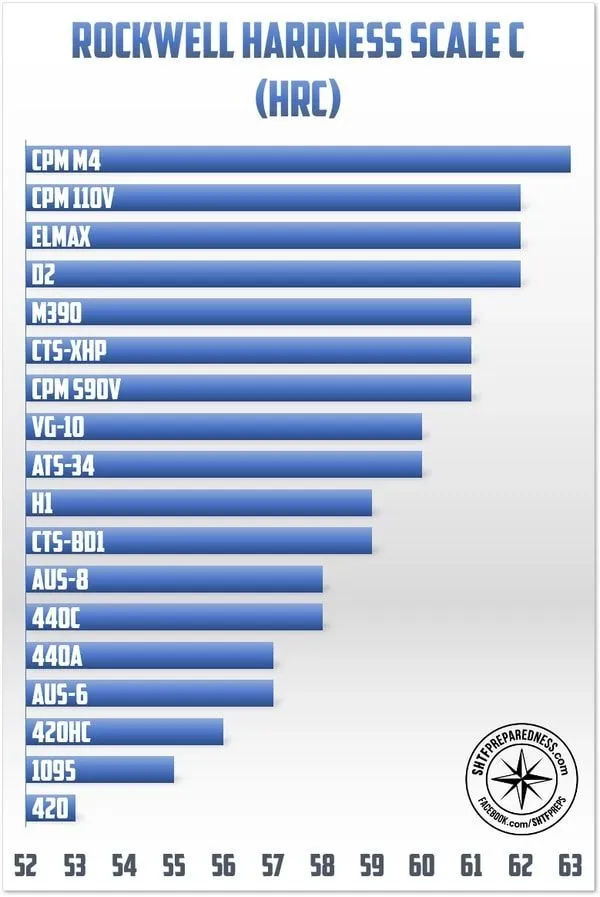
HRC (Rockwell Hardness C) is a designation of material hardness according to the Rockwell C scale. It indicates how resistant a material is to penetration by a foreign body (indentation) and is used primarily for hardened steels and heat-treated metal parts. HRC is therefore the standard hardness designation for hardened steels on the Rockwell C scale. It expresses resistance to indentation and wear and is a key parameter for evaluating the quality of firearm and airsoft components. A correctly chosen HRC value means longer service life, reliability, and safe operation of the part in a weapon.
How is HRC hardness measured?
In Rockwell HRC testing, a diamond cone (the so-called Brale indenter) is pressed into the material under a precisely defined load. The instrument then measures the depth of the indentation and converts it into a numerical HRC value.
A simple rule applies: the higher the HRC value, the harder the material.
What does HRC represent in practice?
- Wear resistance – higher HRC means less wear due to friction.
- Surface strength – the material deforms less.
- Brittleness – extremely high hardness can mean lower toughness.
Typical HRC values
- 20–30 HRC – softer steels, structural parts.
- 35–45 HRC – commonly hardened mechanical components.
- 45–55 HRC – quality firearm parts, gears, bolts.
- 55–65 HRC – tools, knives, extremely stressed components.
HRC and firearms / airsoft
In firearms and airsoft components, HRC is used to assess quality, for example, in:
- gears,
- hammers and sears,
- shafts and pins,
- bolts and carriers.
Too low hardness means rapid wear, while excessively high hardness can lead to cracking. Quality manufacturers therefore choose a balanced compromise between hardness and toughness.
HRC vs. other hardness scales
- HRC – hardened steels (most common for firearms).
- HRB – softer metals (brass, mild steel).
- HV (Vickers) – very precise method for thin layers.
- HB (Brinell) – cast irons and coarser materials.
Powered by Froala Editor